

A dentist and dental assistant treating a patient in a dental clinic; the patient is lying in the chair with mouth open, while both professionals wear masks and gloves.

When Are Extractions Better vs. Repairs?

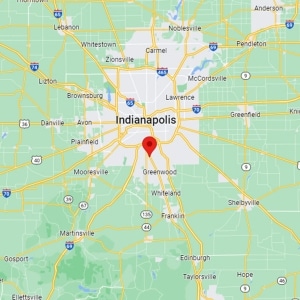
If you have tooth pain and think your tooth needs to come out, then you may be looking for a dentist who performs extractions in Indianapolis, Indiana. You also might wonder if it’s better to fix the tooth (or if that is even a possibility). At Indiana Emergency Dental, we take X-rays and do our due diligence to help save the teeth we can while ensuring we remove those that can no longer stay in the mouth due to damage or infection.

When Teeth Have To Be Extracted

Sometimes, teeth are badly damaged or infected, which can mean that an extraction is the better choice. Extractions also tend to cost less than repairs, which may come into play in some circumstances.

Times when tooth removal makes sense include:

  • When a tooth has broken below the gum line
  • When one of your teeth has decayed and has little healthy tissue or bone remaining
  • When leaving the tooth in place could lead to a risk of infection to the teeth or bone around it

When Teeth Can Be Repaired

Most of the time, saving your natural tooth is the best choice. If the damage to your tooth isn’t too severe, then that may be the correct route to take. Some times when we suggest repairing the tooth include when:

  • You need fillings for small to medium cavities
  • You need a simple crown for a crack or larger cavity
  • We have the option of performing a root canal instead of an extraction

These treatments allow you to keep your real tooth, which protects your natural bite.

Tooth Extractions in Indianapolis, Indiana

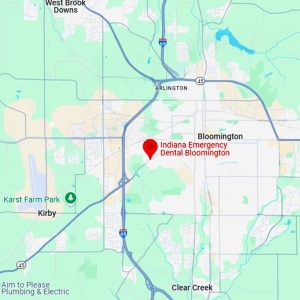
At Indiana Emergency Dental, we perform tooth extractions in Bloomington and Indianapolis, IN. Call us today at 1-463-276-0541 to schedule your visit and learn more about your options.

A dentist wearing orange gloves demonstrates cavity treatment on a large tooth model in front of a seated patient.

Root Canal vs. Extraction: Which Is Right for You?

If you have tooth pain and know you need a root canal or an extraction in Bloomington or Indianapolis, Indiana, you may not be sure which one to go with. On one hand, you can save your tooth. On the other hand, you could be out of pain quickly (and save money in the short-term). At Indiana Emergency Dental, we want to give you more information so you can make an educated decision.

Why Choose To Have a Root Canal?

The primary reason to choose a root canal is that there is still enough healthy natural tooth left to keep the natural tooth. During the procedure, the infected pulp inside the tooth is removed, the canals are cleaned, and the space is sealed.

Most of the time, your tooth will also need a crown to protect the root canal, ensuring the tooth is stable over time.

Root canals can be a good choice when the tooth still has enough healthy structure. Keeping your natural tooth helps you chew comfortably and prevents other teeth from shifting out of position. You also won’t need to consider a bridge or other replacement option.

When Should You Have a Tooth Extracted Instead?

Some teeth are too far gone and need to be pulled. We typically extract teeth that are:

  • Severely infected
  • Broken below the gumline
  • Too weak to hold a crown
  • Pushing against and crowding other teeth

Learn More About Root Canals vs. Extractions in Bloomington and Indianapolis, Indiana

If you are deciding between a root canal and an extraction, call Indiana Emergency Dental. We’ll explain your options clearly and help you choose what works best for you, whether you need emergency care or can wait for an appointment. Reach us at 1-463-276-0541 to schedule an appointment today.

Two dental professionals in blue gowns perform a dental procedure on a patient lying back with their mouth open, using dental instruments and a light.

Symptoms of an Impacted Tooth

Knowing when to seek help for a dental problem is one of the keys to optimal oral health. In particular, there are certain signs and symptoms you should be aware of relating to an impacted tooth. If you suspect you have an impacted tooth in Indianapolis, IN, contact Indiana Emergency Dental right away for help.

Symptoms of an Impacted Tooth

The following are the most common symptoms of an impacted tooth. However, note that symptoms may vary depending upon how the tooth is impacted, and other individual circumstances. If you suspect that you have an impacted tooth, contact your dentist for an official diagnosis and treatment.

Pain and/or Discomfort

Often, an impacted tooth will cause pain and/or chronic discomfort. It may be persistent, throbbing or intermittent, and can range from mild to intense. Sometimes the pain gets worse when biting down on the area, due to the added pressure.

Swelling and Redness

The gum tissue around the affected area often becomes inflamed, causing redness and swelling. You may even notice that your cheek is swollen and tender. If you put your hand to your cheek, there may be a noticeable warmth, too.

Halitosis

Impacted teeth often lead to infection. This infection causes halitosis, commonly called bad breath. It may even manifest as an unpleasant taste in the mouth, or a bad odor in your nose, even though nothing in the outside environment is odorous.

Headache or Earache

Another common symptom of an infected tooth is a headache or earache. This is because pain and pressure often radiates to other areas in the nerve network.

An impacted tooth should never be ignored, as it will always worsen, jeopardizing your other teeth and your overall health. Contact your Indianapolis, IN dentist at Indiana Emergency Dental to learn more or for emergency dental assistance.

A woman in a dental chair looks anxious with her mouth open as a dentist wearing gloves holds dental instruments near her.

What Are Horizontal Impactions?

There are many reasons why a tooth may need to be extracted. Although the primary goal of your Indianapolis, IN dentist is to preserve all of your natural teeth, sometimes conditions arise, such as a horizontal impaction, where tooth extraction becomes the only solution. If you have been advised that you have a horizontal impaction, you will almost certainly want to learn more about it.

What Are Horizontal Impactions?

Horizontal impactions occur when a tooth can’t emerge above the gum line. Instead, it lies horizontally inside the gums and/or jawbone. Teeth are supposed to align vertically, so this kind of horizontal position makes it impossible for the tooth to function as it should. Most often, a wisdom tooth is horizontally impacted. Thankfully, wisdom teeth are not considered to be essential, so having to extract a tooth of this kind will not negatively affect the bite.

Why Are Extractions Necessary With a Horizontal Impaction?

The individual tooth that is horizontally impacted may cause problems. These include:

  • pain
  • swelling
  • infection
  • formation of cysts
  • alignment problems with abutting teeth

This is why, even if the impacted tooth isn’t painful, it must be extracted.

Why Does This Happen?

There are several reasons why this condition may occur. There may be genetic factors, insufficient space in the jaw for all teeth to properly emerge, late development of wisdom teeth, or another reason. One thing that it’s rarely related to, is oral health. A person may be very vigilant about brushing and flossing and still end up with a wisdom tooth that is horizontally impacted.

If you have a horizontal impaction in Indianapolis, IN, contact Indiana Emergency Dental. We offer a full range of dental services, including treatment for horizontal impaction.